Vintage Plaid Heart
As a designer who’s stitched hundreds of embroidery projects—from boutique baby onesies to Etsy best-selling tote bags—I opened Vintage Plaid Heart expecting charm. What I found was something more useful: a quietly confident design that leans into nostalgia without leaning too hard. It’s not fussy, not overly detailed, and doesn’t pretend to be anything other than what it is—a warm, approachable heart built from plaid rhythm and soft vintage cadence. I immediately pictured it on a linen tea towel for a small shop’s Valentine’s Day launch, then on a lightweight cotton apron for a local café’s staff gifts.
First Impressions: Simplicity with Texture in Mind
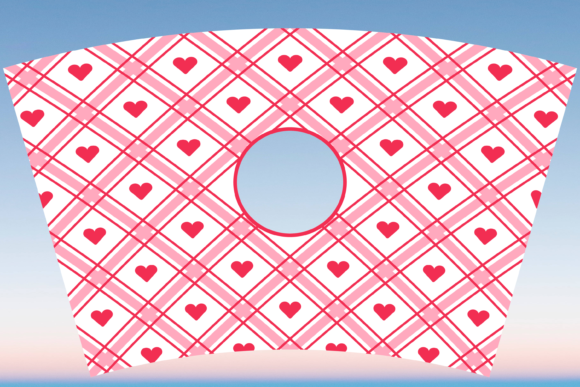
The shape is generous but grounded—no sharp points or fragile curves that fray under stitching. The plaid pattern inside the heart isn’t pixel-perfect gridwork; it’s slightly softened, with subtle line weight variation that reads beautifully in satin stitch. That’s critical. Many “plaid” embroidery files collapse into muddy fill-stitch noise at small scales, but Vintage Plaid Heart avoids that trap by keeping internal lines bold enough to register clearly—even at 3.5 inches wide. It breathes. It doesn’t scream. And for handmade product makers, that’s often the difference between “cute” and “compelling.”
Where It Shines (and Where It Asks for Care)
I tested Vintage Plaid Heart as a machine embroidery design on three real-world substrates: medium-weight cotton twill (for embroidered patches), brushed poly-cotton sweatshirt fabric (for custom apparel), and lightweight linen (for pillow covers). On twill, it held crisp edges with minimal stabilizer—ideal for an embroidered patch meant to be sewn onto a denim jacket. On the sweatshirt, I used tear-away + light cutaway combo, and the plaid lines stayed distinct, not swallowed by pile. But on the linen? I slowed my machine speed and reduced top tension slightly—the open weave grabbed thread more readily, and the outer satin border needed extra attention to avoid puckering.
This design works exceptionally well for:
- Personalized gifts: Think baby onesies (with gentle stabilizer), kitchen towels, or holiday stockings—where warmth and recognition matter more than flash.
- Small shop merchandise: A single Vintage Plaid Heart on a neutral canvas tote signals thoughtful curation, not mass production.
- Etsy seller assets: It layers cleanly into printable mockups—especially against muted backdrops—and reads well in black-and-white product thumbnails.
- Commercial embroidery projects: Its clean outline and moderate stitch density make it reliable across multiple hoop sizes and fabric types, assuming proper prep.
Use caution on:
- Curved surfaces like caps: The heart’s full shape may distort if hooped tightly on a curved bill—consider simplifying or using only the top half as a subtle accent.
- Stretchy fabrics (e.g., knits): Requires excellent stabilizer pairing and possibly reduced density—test first on scrap.
- Dark or textured fabrics: While the plaid reads well on light backgrounds, fine thread contrast matters. Test your chosen thread colors on dark fabric before committing.
- Frequent-wash items (baby clothes, towels): Confirm stitch density supports durability—tighter fills hold up better over time.
Design Integrity Meets Real-World Value
What makes Vintage Plaid Heart stand out among Print Templates isn’t novelty—it’s restraint. There’s no unnecessary embellishment, no micro-detail that vanishes when stitched. That directly impacts how customers perceive your finished product: cleaner lines read as more professional, consistent spacing builds trust in your craftsmanship, and balanced negative space keeps the eye engaged—not overwhelmed. I’ve seen too many craft businesses undercut their own value with overdesigned graphics that look great on screen but muddle in thread.
For Etsy sellers and small shop owners, this design strengthens brand consistency. It pairs naturally with serif typography, muted palettes, and natural fiber goods—so whether you’re listing it as a standalone digital embroidery file or stitching it onto a batch of aprons, the visual language stays cohesive. And because it’s rooted in timeless motif (heart + plaid), it avoids seasonal expiration—unlike trend-driven Graphics that feel dated by July.
Practical Designer Notes Before You Stitch
Before adding Vintage Plaid Heart to your next embroidery project, do these five things:
- Test on scrap fabric—same type and color as your final piece—to check stitch clarity and stabilizer performance.
- Review thread color contrast, especially if stitching on dark or printed fabric. A warm burgundy or charcoal gray thread often reads richer than black on deep backgrounds.
- Check stitch density in your embroidery software—if it’s dense, consider slight reduction for delicate fabrics or high-wear items.
- Confirm hoop size compatibility with your intended placement (e.g., left chest vs. center back) and fabric drape.
- Verify licensing terms—since this is a digital embroidery file marketed for Cricut and printable use, confirm whether commercial stitching rights are included before selling finished embroidered products.
Also worth noting: while Vintage Plaid Heart originated as a Cup Wrap SVG, its core graphic translates cleanly to embroidery. That versatility is rare—and valuable. It means you can use the same asset across print-on-demand tea towels, heat-transfer vinyl mugs, *and* machine-stitched patches without visual whiplash.
A Design That Earns Its Place
In my studio, designs earn shelf space by solving problems—not just looking nice. Vintage Plaid Heart solves for warmth without cliché, detail without fragility, and charm without clutter. It fits naturally on a baby blanket gifted at a shower, on a barista’s apron, or as a subtle logo on a craft fair banner. It doesn’t demand attention—it invites it. And for designers building real businesses, that quiet confidence is harder to find—and far more valuable—than any trending filter or flashy effect.
If you’re choosing embroidery files for client work, shop inventory, or your own creative practice, treat Vintage Plaid Heart like a trusted neutral in your palette: reliable, adaptable, and always ready to elevate—not overwhelm—the handmade product beside it.